

I’ve asked myself this question more times than I can count.
Am I a coward for staying? For ending up back in the same town I grew up in, in the same zip code I’ve known my whole life, watching the world move on from a place that feels increasingly like a waiting room?
For a long time I thought the answer was yes.
I was wrong about the question.
Here’s the thing about asking whether you’re a coward for never leaving your hometown: it assumes you never left.
I left. Twice. I packed my things and I went somewhere new and I tried to build a life there not once but twice. And both times — the combination of depression and circumstance and bad timing and things I still don’t fully understand — sent me back.
I didn’t stay because I was too scared to go. I went. And the world sent me back.
I’m still working out what to call that.
When I graduated in 1995, I had nothing lined up. No job. No plan. No direction. I’d been born and raised in this town, got my degree here, and when it was over I just kind of stood there blinking. Everyone else seemed to know what came next. I didn’t.
So I stayed. I told myself it was temporary.
A couple of years passed. I fell in love. We were together for two years and for a while that was enough — enough to feel anchored, enough to stop asking the bigger questions. But he had a life to build and I didn’t know how to build one with him. So he left and I stayed and I felt, for the first time, what I can only describe as being stranded. Like everyone else knew how to swim and I was just treading water, watching them go.
That feeling was the thing that finally pushed me out the door.

I moved to Minneapolis in 2000 to be near my sister, and because there was the promise of a temp job at the university — something I could step into and see what it might turn into.
I crashed into her world that first year. We rented a house together right next to the University of Minnesota, close enough that I could walk to what would eventually become my office. Her roommates, her music student life — I stepped into all of it. And something in me exhaled for the first time in years.
The temp job turned full-time. I was doing well. I genuinely loved Minneapolis — the city, the energy, the feeling of being somewhere that had a pulse. For the first time in my adult life I felt like I was actually living rather than waiting to start.
But depression doesn’t care about fresh starts. It doesn’t care that you finally got out, that you’re doing well, that things are looking up. It just shows up — not dramatically, but quietly, like water finding its way under a door. Some mornings I couldn’t get up. Some stretches I couldn’t hold it together no matter how badly I wanted to. I had to take months off at a time, and each time I came back I felt a little more like I was performing the version of myself that had it together, rather than actually being her.
Still, I stayed five years. I built something there, even if it was imperfect.
Toward the end of year five, things started collapsing all at once.
My friend and supervisor announced he was leaving to go back to school in Wisconsin. Our department was being restructured. I could feel my job getting shaky under my feet.
And then, quietly and without explanation, the only friends I had started ghosting me.

I kept emailing my friend at work — just trying to see if he wanted to grab lunch, the kind of thing we’d done dozens of times. The replies stopped coming. My calls went straight to voicemail. I’d walk through the week replaying conversations, trying to find the thing I’d said or done, and coming up empty. Eventually I stopped trying to figure it out and just sat with the bewilderment of it — the particular loneliness of losing people without ever being told why. To this day, I still don’t know what happened.
So I did what you do when everything falls apart at once. I said screw it and I moved to Madison.
I packed up my life again in 2005 — this time with my dog, Tinker, riding shotgun, the only part of it that felt uncomplicated.
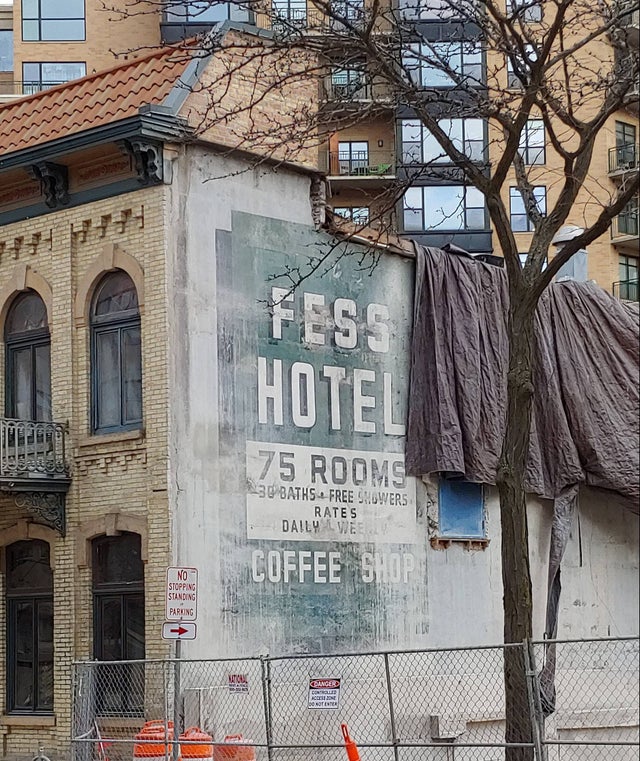
At first it almost felt like I was doing it right. A friend helped me find an apartment, and in between showings we ended up at the Great Dane Pub & Brewing Co. — this old building that used to be the Fess Hotel generations ago, the kind of place with history you can feel in the walls. My sister came to visit. We saw the movie version of Rent and both walked out of it like: what was that? We hated it. It was one of those small, normal moments that made it feel like maybe I was building something.
Then the rest of it started to slip.
I tried to get a job at the university and completely misread the situation — applied for something my skills had nothing to do with. The embarrassment of it has a particular texture: like realizing mid-sentence that you’ve been speaking the wrong language in a room where everyone else is fluent. The friend who’d encouraged me to move wasn’t around much once I got there. And I found myself again in a place I didn’t belong, without the footing I thought I’d have, not knowing what to do or where to go.
I lasted six months.
So I came home.

It was 2006. West-central Illinois. Three to four hours southwest of Chicago. The town I grew up in. The town I graduated from. The town I thought I’d escaped.
There was a logic to it that had nothing to do with my own career or my own pride. My parents were still there, living in my childhood home with its big, familiar yard. I knew that back there, Tinker would have room to run. If I couldn’t give myself a solid foundation, I could at least give her that.
I told myself it was temporary again. I’d take pre-pharmacy classes. Work toward a PharmD. Build something new. Get out again.
That didn’t work out either.
Somewhere between the failed plans and the depression that never really let up and the physical issues that started limiting what I could do, temporary became indefinite. I ended up on disability. The dream of Minneapolis — of going back, of rebuilding something there near my sister — sits on a shelf I can’t quite reach.

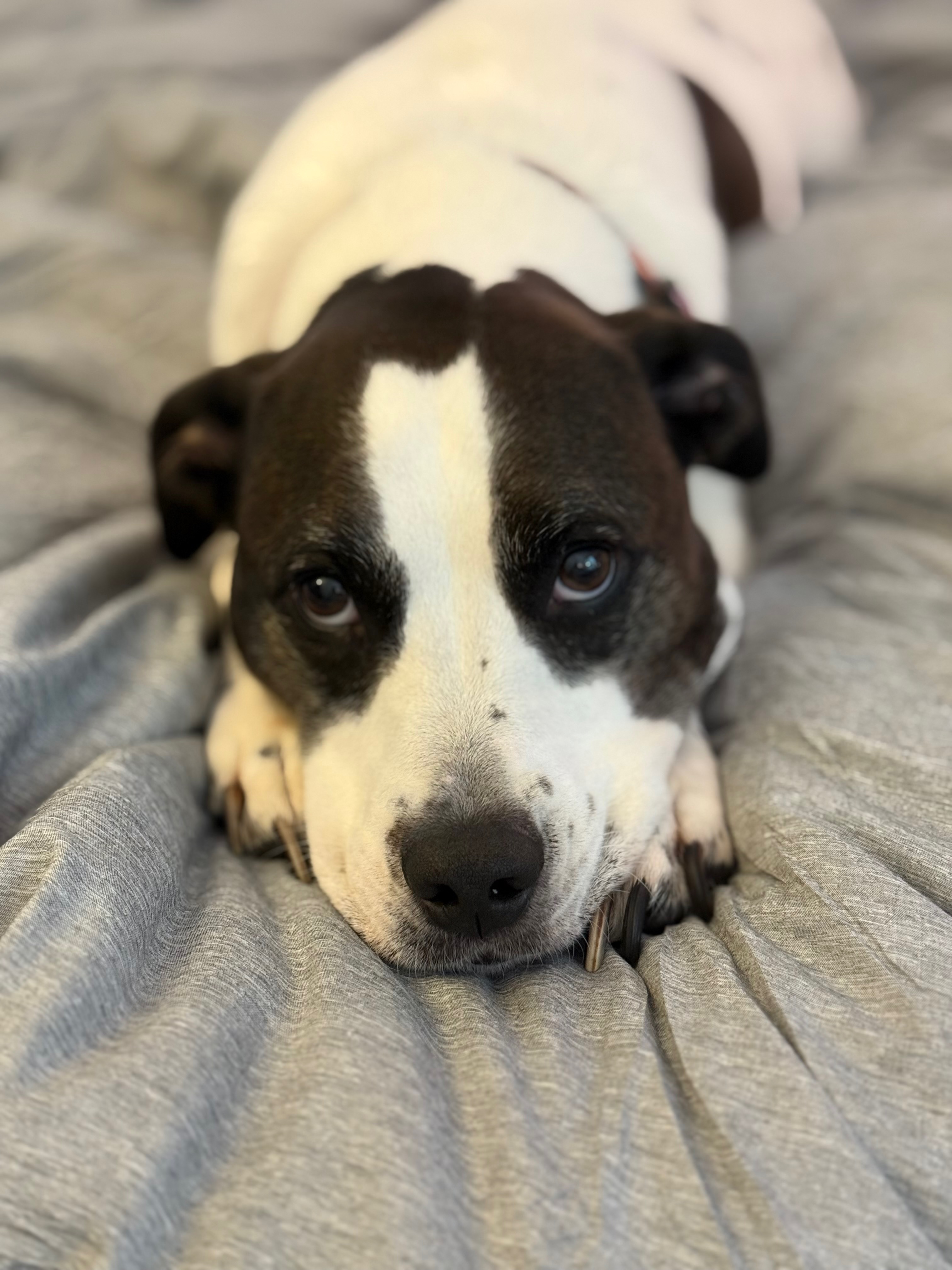
Tinker’s been gone about eight years now. I have Pepper now, because at some point you realize you need another living presence in the room with you — something that keeps you tethered to the present tense.
The familiar isn’t weakness. Sometimes it’s just survival.
But home can also become a hiding place. And the thing I find hardest to sit with is that stability and stagnation look identical from the outside. Both people wake up in the same town they grew up in. One chose it. One just never found a way out.
I don’t always know which one I am. I’m not sure that distinction is as clean as it sounds.
I still think about Minneapolis. I think about my sister there, about the version of me that loved that city, about what it might look like to try again. Maybe I will. Maybe I won’t. Maybe the answer isn’t about geography at all.
Maybe the real question was never whether I was brave enough to leave.
Maybe it was whether I was brave enough to keep going after coming back.
I’m still here. That counts.
— Jerry
I don’t think I’m the only one asking this. If you are too, you’re not alone in it.

Member discussion: