

“Be mindful of the Force.”
If you’ve ever watched Star Wars, you’ve heard that line more times than you can count. Yoda says it. Obi-Wan says it. It sounds wise, a little mystical, maybe even a little vague. But here’s the thing I didn’t fully understand back in 2017 when I first wrote about it:
It’s not just a cool movie line.
It’s actually one of the most practical mental health tools we have.
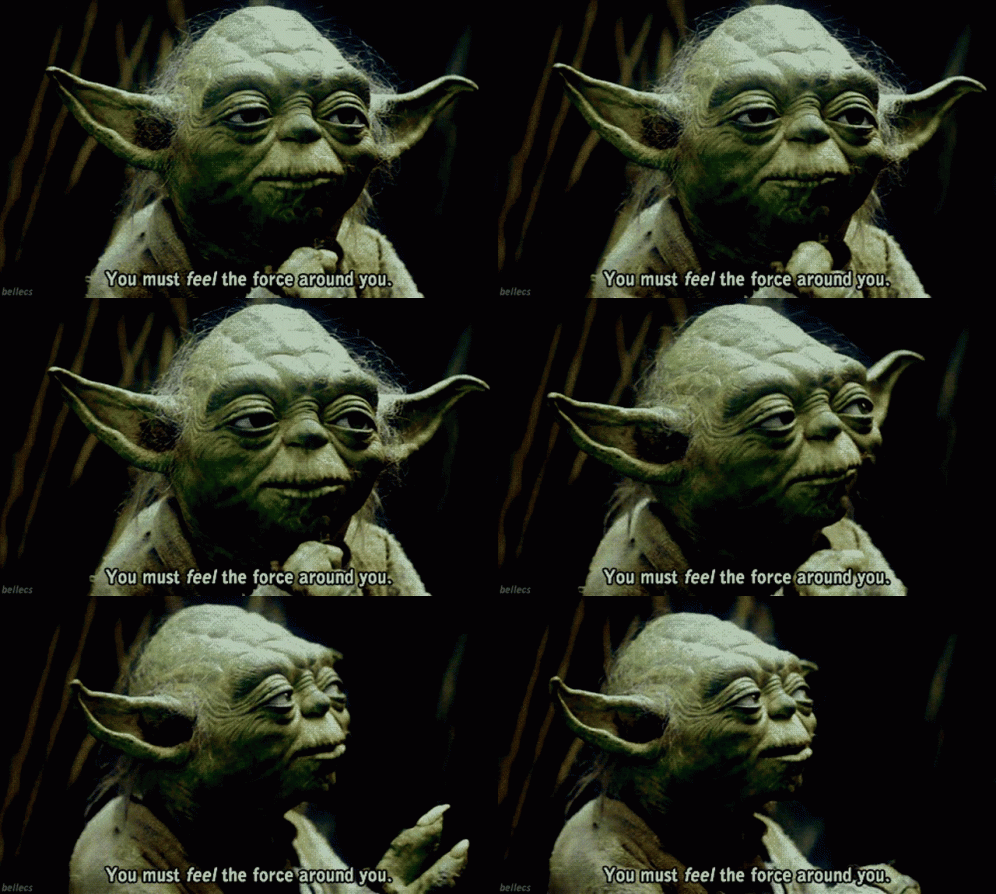
Mindfulness isn’t some abstract, spiritual buzzword. It’s real, it’s grounded, and when you actually start using it, it can change the way your brain reacts to… well, everything.
At its core, mindfulness means this:
Being fully present in the moment you’re in, while noticing your thoughts, emotions, and physical sensations without judging them.
That’s it. That’s the whole thing.
Not the past.
Not the future.
Not the “what ifs” or the “I should have known better.”
Just right now.
And yeah, I know what you’re thinking.
“What if right now sucks?”
Same.
This is where mindfulness starts to feel almost offensive. You’re telling me I have to accept this moment? This anxious, heavy, frustrating moment?
Short answer: yeah.
Long answer: yeah… but not in the way you think.
Acceptance doesn’t mean you like it. It doesn’t mean you agree with it. It doesn’t mean you’re stuck here forever. It just means you stop fighting reality long enough to actually deal with it.
Because most of the time, what’s making us feel worse isn’t just the moment itself. It’s everything layered on top of it:
The “I shouldn’t feel this way.”
The “why am I like this?”
The “what if this never gets better?”
That’s the mental noise. That’s the Dark Side creeping in.
Mindfulness helps you step out of that spiral and go, “Okay. This is where I am. Now what?”
Think about that scene in The Empire Strikes Back.
Luke is hanging upside down in a freezing cave. He’s injured. There’s a literal monster nearby. It’s about as bad as a moment can get.
At first, he panics. Of course he does.
But then he stops.
He closes his eyes. He breathes. He focuses.
He’s not thinking, “I’m going to die.”
He’s not spiraling into “why did this happen?”
He connects to the moment he’s in.
And from that place, he acts.
That’s mindfulness.
Not removing the danger. Not pretending everything is fine. Just grounding himself enough to respond instead of react.
Now let’s bring it out of a snow cave and into real life.
You get an email that sets you off.
Your chest tightens. Your breathing gets shallow. Your brain immediately starts drafting a response that would absolutely make things worse.
We’ve all been there.
That’s your cue.
Instead of firing back, you pause.
You literally feel your heartbeat.
You slow your breathing down.
You notice the tension in your body.
You look around the room you’re in.
You don’t try to “fix” the feeling right away. You just notice it.
And then you remind yourself:
I can’t control what they sent.
I can control what I do next.
That space you just created? That’s the whole game.
Here’s the part nobody loves to hear:
This is not easy.
You don’t read this once and suddenly become calm, centered, and unbothered like a Jedi Master. It takes time. Repetition. A lot of messing it up and trying again.
“You must unlearn what you have learned.” - Yoda
“You must unlearn what you have learned.” - Yoda
Or said another way: you have to unlearn a lifetime of reacting on autopilot.
But it does get easier.
Little by little, you start catching yourself sooner.
You start creating more space between feeling and reacting.
You start realizing you’re not as stuck as your brain tells you you are.
I’m still learning this. Every day.
Some days I nail it. Some days I absolutely don’t.
But the difference now is I know what’s happening. I know there’s another way to respond. I know I can come back to the moment instead of getting dragged around by every thought that shows up.
And that’s powerful.
You don’t have to be perfect at this.
You just have to start noticing.
Start small. One breath. One pause. One moment where you choose awareness over reaction.
That’s it.
That’s how you begin.
Powerful ally, mindfulness is.
And yeah… it’s worth learning its ways.

Member discussion: