

After losing that first experience with Trazodone, I spent years - decades - chasing it.
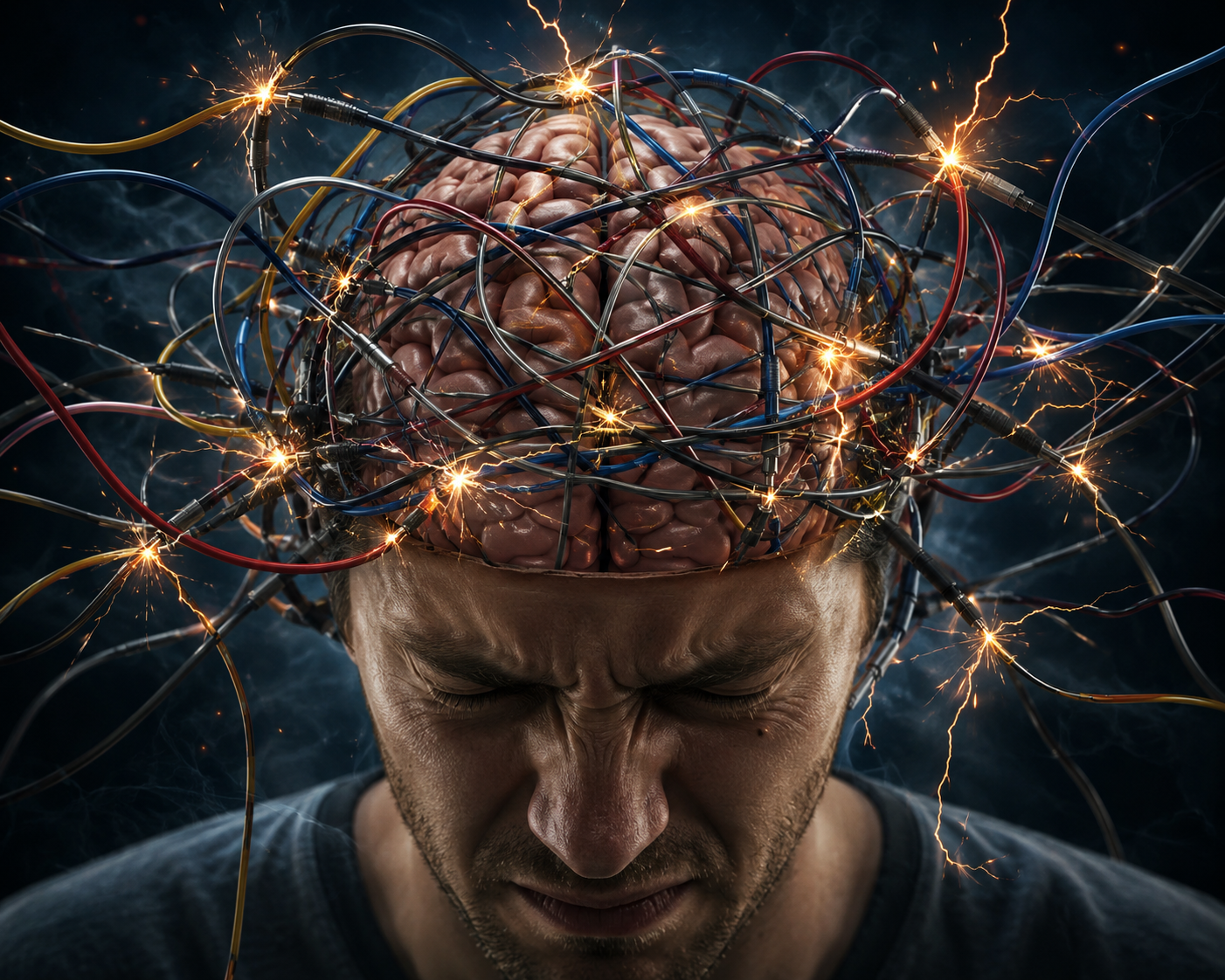
Every new medication felt like another chance to get back to that version of myself. The version that felt light. Calm. Hopeful. Alive.
I kept thinking the next prescription, next dosage adjustment, next combination, or next treatment would finally bring me back there permanently. I was obsessed to say the least.
But the problem was that I was trying to return to a version of myself that existed under completely different life circumstances. My life was changing constantly. I was going back to school. Relationships were changing. Stressors were changing. Responsibilities were changing. My environment was changing.
It’s hard to explain, but it was like trying to recreate the results of an experiment while one major variable never stopped moving. There was no way to perfectly get back to that original “Trazodone summer” because the conditions surrounding it no longer existed in the same way.
So even restarting Trazodone couldn’t fully recreate what I had experienced before. And maybe it actually was helping again to some degree, but my underlying life circumstances had shifted so much that there was no simple way to measure that against what I had originally felt. Life doesn’t fit neatly onto a symptom scale.
What I did instead was throw myself completely into researching psychiatric medications and treatments. I learned mechanisms of action. Side effects. Drug interactions. I bought medication guides, the PDR, books on biological psychology, books on psychiatric medications and treatment-resistant mood disorders.

Then the internet came along, and I found electronic bulletin boards, forums, and support groups filled with people just like me. People searching for their own holy grail. People who felt burned by medications that promised one thing and delivered another.
I reached out to psychiatric researchers and doctors online asking what they thought was wrong with me and what I should try next. I was desperate, but I was also determined. I truly believed the answer was out there somewhere.
Zoloft. Prozac. Wellbutrin. Dexedrine. Paxil. Nardil. Mood stabilizers. Antipsychotics. Combination after combination after combination.
Ativan. Klonopin. Xanax. Ambien. Adderall. Ritalin. Lexapro. Effexor.
I learned what an SNRI was and how it differed from an SSRI. I learned how benzodiazepines affected GABA systems in the brain. I learned how stimulants increased dopamine and norepinephrine signaling. I learned what an MAOI was and how it worked. I became obsessed with understanding why things worked, hoping that if I understood enough, I could somehow solve myself.
And along with all of that came learning how to survive the side effects. Restless legs. Dry mouth. Brain fog. Emotional flattening. Medication fatigue. Insomnia. Sedation. Weight changes. Sexual side effects. Withdrawal symptoms. At some point, managing side effects became almost its own full-time job.
One of the scariest experiences of my life happened in 2002 while living in Minneapolis while I was taking an MAOI. MAOIs are older antidepressants that work very differently from most modern medications, and because of how they affect neurotransmitters in the brain and body, you have to be extremely careful about drug interactions and even certain foods. Back then, I had to follow dietary restrictions and avoid specific medications because combining the wrong substances could create a life-threatening reaction.
One night, while sick, I accidentally took a cold & cough medication containing dextromethorphan, a very common over-the-counter cough suppressant. What I forgot in that moment was that dextromethorphan also affects serotonin levels in the brain. The moment it clicked in my head what I had done, pure panic hit me. I had combined it with my MAOI, and now my brain was being flooded with far too much serotonin.
More serotonin is the goal of many antidepressants, but too much serotonin can become extremely dangerous. The body can react violently. It’s called Serotonin Syndrome, and it can become a medical emergency very quickly.
I immediately took my emergency blood pressure medication, called 911, and laid down exactly the way my psychiatrist had taught me to if something like this ever happened.
Then the shaking started.

Sweating. Tremors. My body felt completely out of control. By the time I got to the ER, I had an entire trauma team around me trying to stop the reaction before it caused severe complications or organ failure. I remember being held down because the shaking wouldn’t stop. They pushed large amounts of Ativan into my IV trying to calm my nervous system and counteract the reaction.
Slowly… very slowly… the shaking began to ease.
I have never been as scared in my life as I was that night. I genuinely thought I might die. And honestly, I came far closer than I’m comfortable admitting.
After that, the treatments started becoming more novel and experimental. At one point I even had an implant designed to send tiny electrical signals into areas of the brain involved in emotion and mood regulation. By then, I wasn’t just trying standard antidepressants anymore. I was chasing anything that might finally break through the depression that seemed determined to survive every treatment thrown at it.
Then came ketamine, or more specifically, Spravato, which is brand name of the S-ketamine form of ketamine. Spravato was approved in 2019 with huge excitement surrounding it because it worked differently from traditional antidepressants and often worked much faster. Instead of waiting four to twelve weeks hoping for gradual improvement like many SSRIs or SNRIs, people were talking about relief happening within days or after only a few treatments. For people with treatment-resistant depression, that kind of promise felt almost revolutionary.
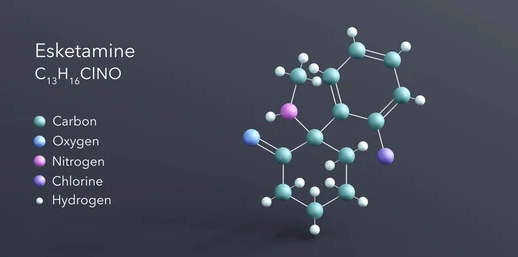
Ketamine-based treatments approach depression from an entirely different angle. Rather than mainly targeting serotonin systems, they affect glutamate pathways and appear to help the brain form and strengthen new neural connections. The way I came to think about it was this: depression can create these deeply worn emotional highways in the brain, where every thought automatically travels down the same hopeless routes over and over again. Ketamine seemed aimed at helping the brain build new exits, new side roads, new pathways that weren’t completely dominated by despair.
Almost like giving the brain permission to bloom again after being emotionally frozen for years.
And for the treatment-resistant crowd, people like me who had already cycled through medication after medication after medication, this felt like an entirely new frontier.
I began taking Spravato around 2023, while I was living back in Illinois.
Was it revolutionary? Honestly, yes.
Did it help me? Also yes. But not exactly in the way I thought it would.
By that point, my entire existence had become organized around chasing a medicinal holy grail that could never truly exist again, at least not in the way it had during that first experience with Trazodone.
Too much had changed.
My brain had changed biologically through years of medications, withdrawals, side effects, stress, adaptation, and emotional survival. But psychologically, I had changed too. My identity had slowly fused itself to the search. The next medication. The next adjustment. The next breakthrough. The next chance to finally “get myself back.”
And the entire time I was chasing this grail like some psychiatric version of Indiana Jones, I was also in therapy.

Therapy absolutely helped me uncover things I needed to face: trauma, codependency, obsessive overanalysis, unhealthy thinking patterns, underdeveloped communication skills, emotional avoidance, all of it. But if I’m being honest, part of me was also using therapy as another place to reinforce the belief that somewhere out there this perfect treatment still existed.
I kept trying to convince my therapists, and honestly myself, that there had to be another holy grail waiting for me. There had to be. No question. No debate. Because I had already experienced it once before, and I couldn’t let go of the belief that it could happen again exactly the same way.
I continued Spravato treatments for roughly two and a half years alongside intense weekly therapy. And somewhere during that time, something inside me slowly started to give up.
Not on life exactly.
And not entirely on the belief that the holy grail was still out there somewhere waiting for me.
But maybe on the idea that I could medicate my way back into being the exact version of myself I had once briefly experienced.
My therapist had been with me almost every week for nine years. Through medication changes, breakdowns, panic, hopelessness, obsessive searching, trauma, relationships, identity struggles, and every other version of me that showed up in that office.
She stuck her neck out for me more times than I can count. Sometimes probably farther than she professionally should have. And I will be forever grateful for that.
Because the truth is, she became my safety raft.
When everything else in my life felt unstable, she was the constant. The one person who kept holding a hand out to me year after year while I kept searching for answers, searching for relief, searching for the grail.
Then one day she told me she and her family were moving away, and eventually our sessions would come to an end.

Member discussion: