

I hesitated to write this because I don’t want it to sound like I’m excusing every bad financial decision I’ve made. I’m not. I know I’ve made mistakes. I know some people reading this will think the answer is simple: budget better, spend less, get a job, work harder.
But I also think there’s a difference between excusing something and trying to understand how it happens.
Growing up, money was always a source of anxiety. I came from a big family with six kids, and there were times my parents had to ask their parents for help just to keep things afloat. Looking back now as an adult, I can only imagine the embarrassment or humiliation they probably felt having to do that while also trying to protect us from how stressed they were.
Even as a kid, though, you feel it. You feel the tension in the room. You hear conversations you weren’t supposed to hear. You notice the stress attached to every purchase, every unexpected expense, every problem.
Fast forward to now, and I can tell you I still carry a massive amount of anxiety surrounding money. My bank account is negative more often than I’d like to admit. I’ve had to ask people for help more times than I’m comfortable with. It’s humiliating. I’ve even lost friendships over it.
And yes, before someone says it, I’m on disability. What I receive is small compared to what many people assume disability pays. There are reasons for that, but honestly that’s not even the point.
The bigger point is this: when you spend years not believing you’ll really be around long-term, you don’t think about money the same way.

You don’t build for a future you can’t picture yourself reaching.
You think about surviving the week. Getting through the month. Finding some kind of relief from your own brain for a few hours.
People often talk about financial responsibility as if everyone is starting from the same emotional and psychological place. But they aren’t.
Depression changes your relationship to the future. Anxiety changes your relationship to security. Shame changes your relationship to asking for help. And over time, all of it can become its own cycle.
I’ve come close to having my phone shut off, my electricity disconnected, and not because I’m constantly buying things I don’t need or living recklessly. For years it’s just been survival mode.
Just trying to make it through a day. Sometimes an hour. Sometimes even just the next ten minutes.
Then maybe the end of the week.
But that was about as far as my ability to financially plan could reach.
People talk about budgeting as if your brain is operating from a stable place all the time. But when you’re mentally unwell for long enough, your focus narrows. Your world gets smaller. Everything becomes immediate. You stop thinking in terms of six months from now because you’re just trying to survive tonight.
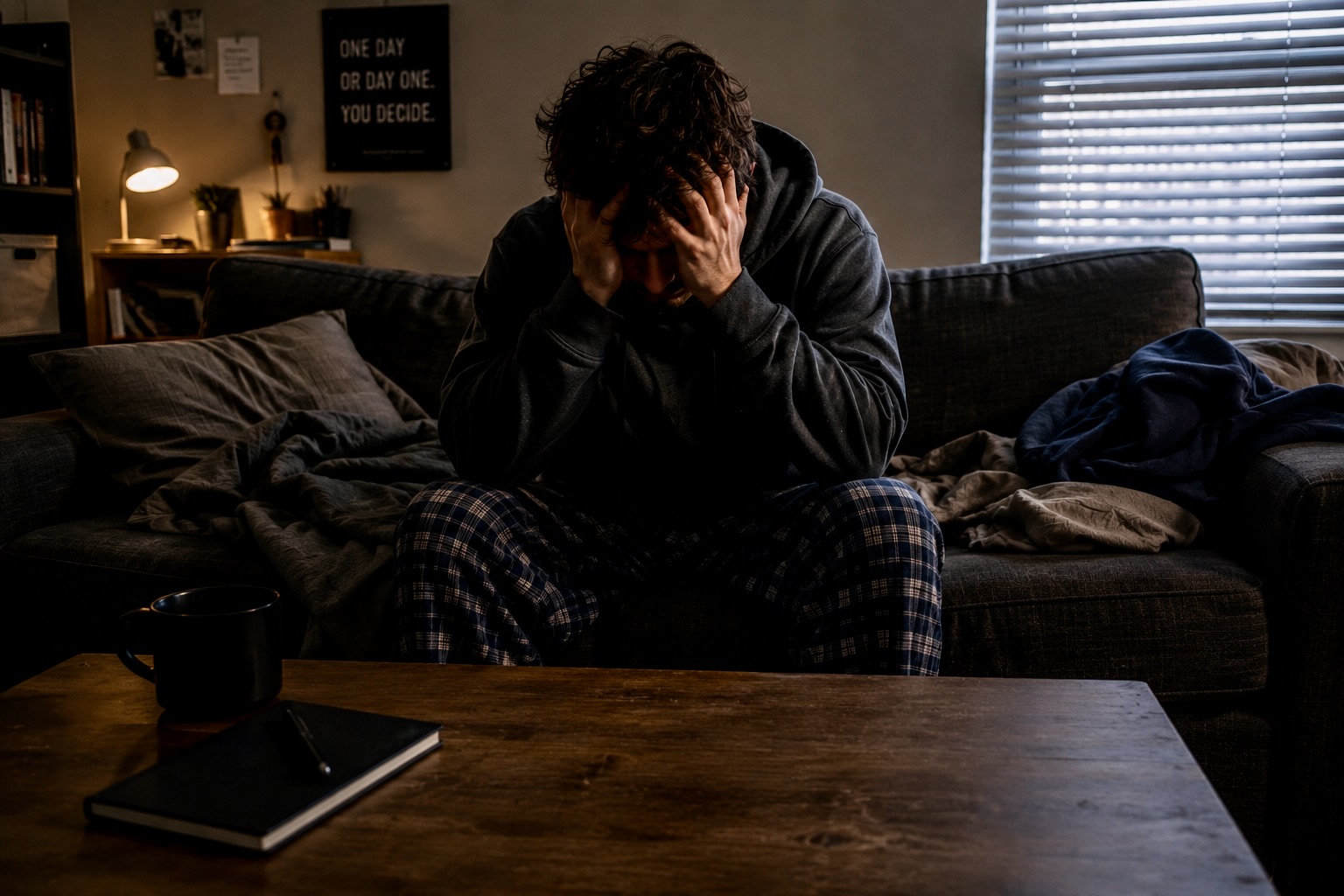
There have been missed appointments I ended up having to pay for because I couldn’t bring myself to go. Unopened disconnect notices sitting on a table until I finally got a brief stretch of feeling better and could force myself to look at them. Late fees. Overdraft fees. Calls I avoided answering because my anxiety was already through the roof.
Barely holding on. Barely staying ahead of the finality of everyday bills.
And I think that’s the part people don’t always understand. Financial struggles connected to mental illness don’t always come from irresponsibility in the stereotypical sense. Sometimes they come from exhaustion. Avoidance. Hopelessness. Executive dysfunction. Living in a constant state of emotional triage where every bit of energy goes toward simply existing.
None of this erases responsibility. The bills still exist whether you’re depressed or not. The consequences still happen. But I do think there is a difference between refusing accountability and acknowledging that mental illness can fundamentally alter how a person functions, plans, avoids, copes, and survives.
It’s gotten so bad at times that I’ve had to pawn things that actually mattered to me. Treasures. Heirlooms. The kind of objects that carry memories with them. Not because I wanted extra spending money, but because survival mode slowly lowers the line of what feels untouchable.
I’ve taken out payday loans knowing full well they were temporary fixes that usually made things worse later. But when you’re trying to survive the current moment, “later” can start to feel abstract. That’s the dangerous part.
I’ve also spent years trying to keep unreliable cars running because without transportation, even the smallest amount of independence disappears. Repairs pile up. One problem turns into three more. And when money is already tight, every strange sound the car makes feels like a threat hanging over your head.
There were stretches where I tried doing rideshare driving on and off just to make enough money to eat. Trying to navigate traffic, customers, car trouble, exhaustion, anxiety, depression, all while pretending you’re functioning normally enough to keep going.
And sometimes you make twenty dollars and feel relieved because at least you can eat that day.
But then tomorrow comes and you have to do it all over again.
And maybe the next day too.
Assuming your depression even lets you leave the house.
That’s another thing people don’t always understand about mental illness and finances. Motivation isn’t on a reliable schedule. Some days you can force yourself through the fog enough to function a little. Other days even taking a shower feels impossible. But bills don’t pause for depressive episodes. Hunger doesn’t pause. Gas tanks don’t pause. Life keeps demanding things from you even when your brain is barely cooperating.
Over time, that kind of existence changes you. It keeps your nervous system in a constant state of panic and instability. You stop feeling like a person building a life and start feeling like someone repeatedly trying to stop one from collapsing.
And with that comes shame.
The shame of avoiding your bank account because you’re terrified of what you’ll see. The shame of unopened bills sitting on a table for days or weeks because looking at them feels emotionally unbearable. The shame of borrowing money. Asking for help. Knowing people are getting frustrated with you. Feeling like you’re slowly becoming someone others see as unreliable or irresponsible when inside you already feel like you’re drowning.
I’ve lost friendships over money. Or maybe more accurately, over what financial struggle eventually does to relationships. After enough times asking for help, enough canceled plans, enough instability, you start to feel like a burden people quietly grow tired of carrying.
So you isolate more.

You stop answering messages sometimes because you don’t know how to explain your life anymore. You get tired of trying to make people understand that mental illness isn’t just sadness. It can affect every practical part of living: organization, motivation, memory, decision-making, long-term planning, emotional regulation, even your ability to open mail or return a phone call.
People often talk about financial hardship as a character issue. A discipline issue. A laziness issue. And sometimes, yes, people make reckless decisions. I’m sure I’ve made my share of mistakes. But I think people underestimate how much prolonged mental illness can distort a person’s relationship with the future itself.
Because when you spend years unsure whether you even want to keep living, concepts like retirement accounts, savings goals, five-year plans, and financial stability start to feel strangely disconnected from your reality. Your focus narrows to survival. Relief. Escape. Temporary stability. Just making it through the week without emotionally collapsing.
And survival mode is expensive.
Not just financially, but psychologically. It robs you of the ability to feel secure, grounded, hopeful, or forward-moving. It traps you in cycles that are hard to explain to people who have never lived with the constant static of anxiety, depression, hopelessness, and fear running underneath everyday life.
I think that’s part of why financial shame cuts so deeply for people struggling mentally. Money becomes tied to your worth. Your competence. Your independence. Your adulthood. Every overdraft fee starts to feel less like a financial problem and more like evidence that you’re failing at being a person.
And after enough years of living like that, you stop seeing yourself as someone building a life. You start seeing yourself as someone constantly recovering from one emergency just in time for the next one to arrive.
I don’t write any of this to avoid responsibility or ask for pity. I know there are consequences to the way I’ve lived at times. I live with those consequences every day. I just think there is a real difference between recklessness and survival mode. Between not caring and being emotionally exhausted. Between refusing to plan and struggling to imagine a future that felt real enough to plan for.
I don’t think people understand how hard it is to build a future when your brain has spent years convinced there wouldn’t be one.

Member discussion: