

Millions of people live with chronic illness, chronic pain, depression, and anxiety. So why does mine still feel like something nobody else can fully see?
For a while, I worried that asking that question sounded self-important. Like I was trying to claim my pain was somehow deeper or more unique than everyone else’s. But I don’t think that’s what I’ve been searching for at all.
Maybe pain itself isn’t unique. Maybe suffering is one of the few things almost all of us eventually share in some form. The diagnoses may not be unique either. Depression. Anxiety. Loneliness. Chronic illness. Grief. Financial stress. Shame. Millions of people carry these things every day.
But common doesn’t mean easy.
The fact that suffering is widespread doesn’t magically make living through it lighter. Depression being common doesn’t make mornings easier to survive. Chronic pain being understood medically doesn’t make it less exhausting to live inside a body that constantly hurts. Shared experiences may make us feel less alone, but they do not erase the experience itself.
Maybe that is part of why hearing other people speak honestly about their struggles can feel strangely comforting. Not because it cures anything, but because it reminds us we are not anomalies. Not broken in some uniquely disqualifying way. There is relief in realizing other people’s minds work like yours sometimes. Other people carry shame too. Other people silently fall apart and still try to function anyway.
Not cured. Not fixed. Just recognizable to each other.

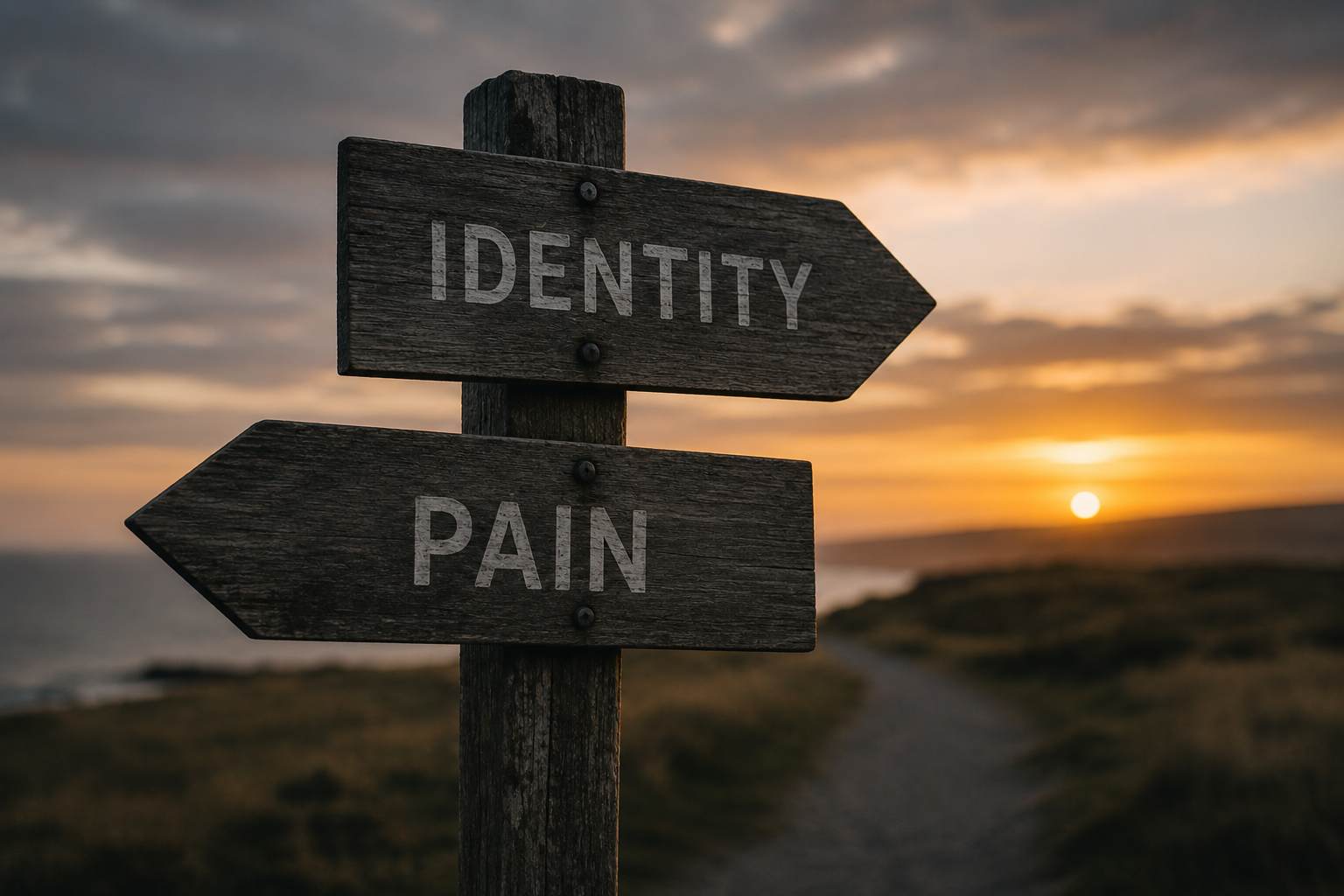
I used to tell my therapist that I didn’t want to become some kind of poster boy for depression. I didn’t want suffering to become my identity. And sometimes I worry people think I let it. That by speaking openly about chronic pain, depression, anxiety, isolation, or the ways these things have reshaped my life, I somehow allowed them to define me completely.
But I never signed up for this. I don’t think anyone else did either.
Nobody dreams of becoming an expert in survival. Nobody hopes to build their personality around managing pain, exhaustion, fear, shame, or emotional instability. These things arrive slowly and begin reshaping the structure of a life whether you want them to or not. They affect your routines, your relationships, your confidence, your finances, your body, your sense of future. Pretending they do not shape a person would not be strength. It would be denial.
But there is also a difference between being shaped by suffering and being entirely defined by it.
I am candid because it’s real, not because it’s who I am.
People often mistake openness about pain for a life consumed by it. But suffering is not a complete inventory of a person. It may explain certain parts of me, but it does not explain all of me. There are still parts of me that exist outside survival mode. Humor. Creativity. Curiosity. Connection. Hope. The quieter parts people do not always see because pain is easier to notice than endurance.
Maybe that’s the balance I’ve been searching for.
To acknowledge suffering without turning it into my entire identity.
To admit that pain has shaped me without believing it is the only thing worth seeing in me.
I don’t want to be reduced to my suffering.
But I also don’t want to spend my life pretending it hasn’t changed me.
Maybe the goal was never to overcome pain so completely that it leaves no mark.
Maybe the goal is simply to remain a whole person while carrying it.

Member discussion: