

There’s a very specific kind of magic that only exists in a summer music theater pit orchestra. If you’ve ever sat in one, you know exactly what I mean. At Western Illinois University’s Summer Music Theatre (SMT), that magic depended on one simple thing:
You could actually see the stage.
For decades, the pit was a living, breathing part of the show. We weren’t hidden away in some dark cave somewhere. We were right there in the open, crammed into a trench with twenty of our friends, a forest of music stands, and this beautiful mess of sound: trumpets, flutes, clarinets, timpani, violins, bass, piano, and cello.
Part of the joy was watching the action unfold right above your head while you played. There was this constant exchange of energy between the actors and the musicians. You could feel it every night.
It worked beautifully for twenty years, and for my family, it became part of the backdrop of our lives.
A Full-Circle Overture
My history with the SMT pit actually started before I was even born.
Back in the summer of 1972, the resident cellist in the open pit was my mom. She spent that whole season playing through demanding show books while heavily pregnant with me, her cello resting right against her belly. I like to think my first exposure to music came through those vibrations echoing through the theater.
Fast forward seventeen years to 1989.
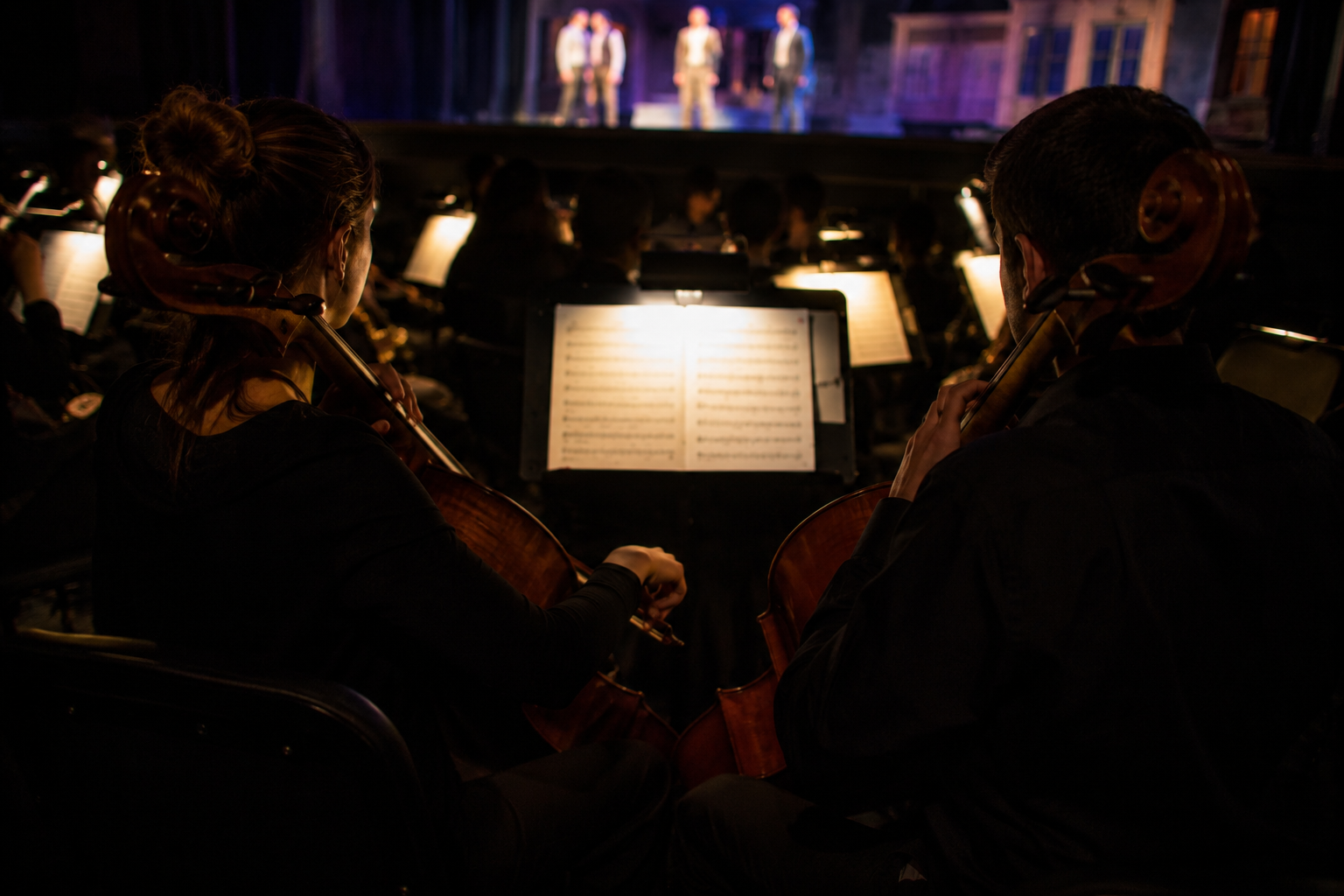
The theater needed to expand the section, and instead of simply replacing her, I got to join her. My mom didn’t just hand me the bow and disappear. She stayed right there beside me in the cello section. During the 1989 and 1990 seasons, we played side-by-side under the stage lights, navigating frantic page turns together.
Sitting next to your mentor, who also happens to be your mom, is something I’ll always carry with me.
After those two summers together, she officially retired. I kept playing through my college years and continued returning to the pit off and on until I finally left Macomb in 2000.
For those first shared seasons, we were guided by a true Macomb legend: Dr. Maughan McMurdie. Doc McMurdie had been there since the very beginning of SMT. He was conducting when my mom played pregnant in 1972, and he was still standing on the podium when we played together years later.
Having him there made the whole thing feel strangely complete, like a family story circling back around on itself.
Spotlight and Heartstrings
Because the pit was open back then, we didn’t just see choreography and costumes. We saw people.
And one particular summer, the theater magic became deeply personal for me.
I fell completely in love with one of the performers on stage.
Every night, watching him under the lights made my heart race. Rehearsals suddenly mattered in a whole different way. The romantic songs in the score started feeling a little too real.
What I remember most, though, happened after the curtain came down.

We’d leave the theater late at night, drive out past the lights of town, and end up parked in some open field somewhere. We’d climb onto the hood of my car and lie there under the cool night sky talking for hours while the stars stretched above us.
It was simple. Quiet. Romantic.
And honestly, it was one of the best, sweetest summers of my life.
The Great Pit Battle
Then came 1992.
Doc McMurdie retired, and the administration decided to “fix” something that never really felt broken in the first place.
The higher-ups became convinced the pit orchestra was too loud and that audiences couldn’t properly hear the performers onstage. Their solution was to dig the pit lower into the ground.
Musicians immediately hated it.
Suddenly we were cut off from the stage. We couldn’t really see the actors anymore. That sense of connection started disappearing. The little moments that made live theater feel alive were gone.
And we all kept asking the same question:
If this setup worked for twenty years, why was it suddenly a problem now?
Nobody ever really gave us a clear answer.
Apparently lowering the pit still wasn’t enough, because eventually the actors were given microphones. Then, when that still didn’t satisfy the powers that be, they built an actual cover over the pit itself, leaving only a narrow opening for the conductor.
That changed everything.
The Covered Summers
Once the cover went up, the entire experience changed.
We were boxed in underneath the stage, barely able to hear what was happening above us. Instead of reacting naturally to the performers, we relied on a little monitor shoved into the pit.
The connection between the cast and orchestra was gone.
And looking back now, that cover feels symbolic of something bigger.
It was the beginning of the slow disappearance of live pit musicians in Macomb.
Eventually funding dried up and the summer theater program faded away altogether. Later productions experimented with prerecorded tracks and digital replacements, but by then something essential had already been lost.
The soul of it.
Keeping the Pit Alive
The performances I love remembering aren’t the ones spent staring at the underside of a wooden cover.
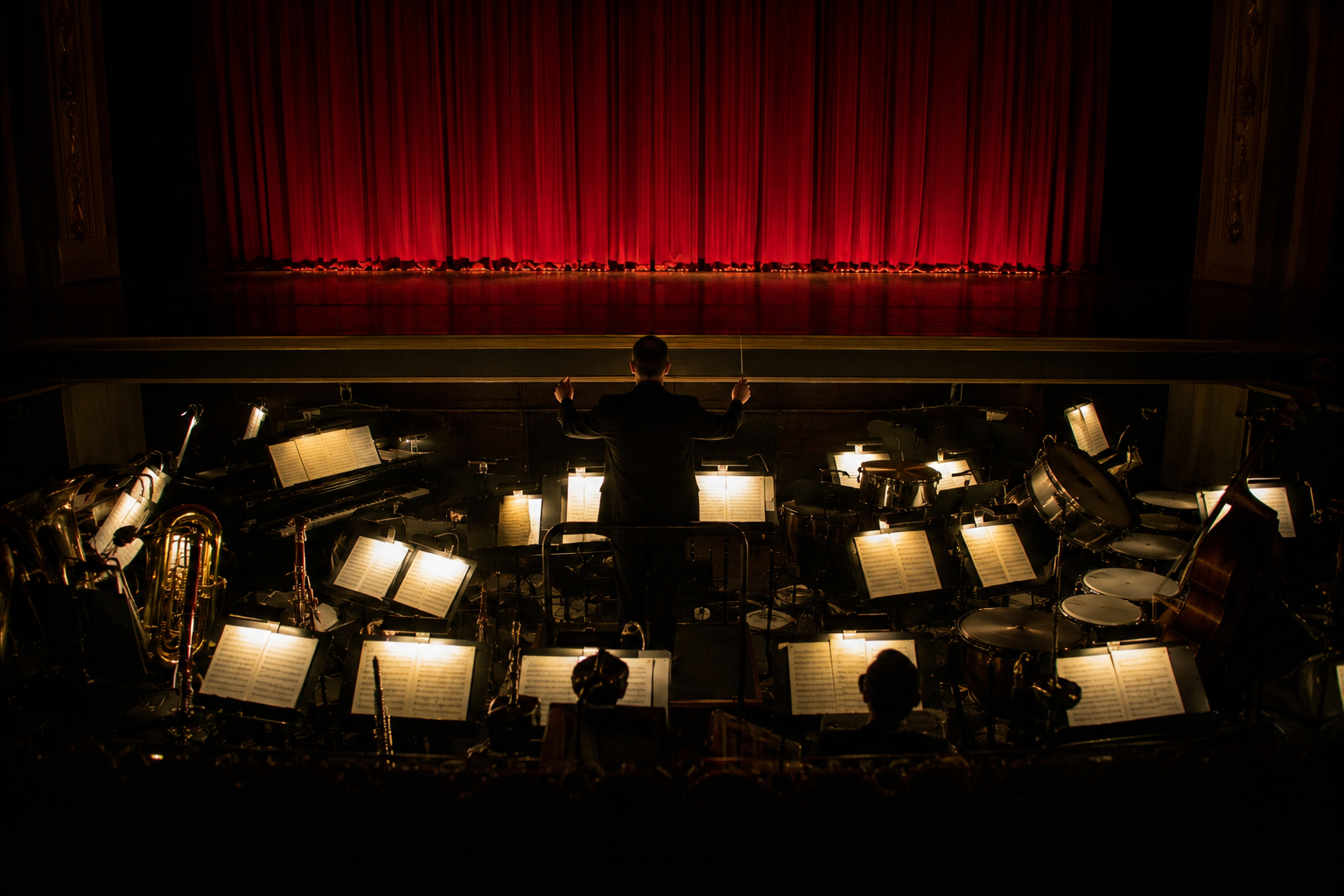
The ones I hold onto are the summers when the pit itself felt alive. The warmth of real violins. The brass cracking through a big number. The rumble of timpani. Two generations of cellists sitting side-by-side trying to hold it all together.
It was fun. Real fun.
Looking back now, I realize how lucky I was to experience the tail end of that era.
Every time I tighten my bow today, I still think about how a line that started in an open pit in 1972 somehow came full circle for me years later.
Recorded tracks may hit the right notes, but they’ll never have a heartbeat.
They’ll never know what it felt like to fall in love under stage lights, or drive out into the dark after the final curtain and lie on the hood of a car talking beneath the stars.
The funding may have disappeared. The theater may have gone quiet.
But the memories never really do.

Member discussion: