

At one point, I had a device implanted in my chest that sent electrical pulses into my brain every five minutes.
I had run out of options.
I was Borg.

“Resistance is futile” is something the Borg say in Star Trek. It means there’s no point fighting back. You’re going to be overtaken no matter what you do.
That idea stuck with me. Because when you live with depression long enough, especially the kind that doesn’t respond to treatment, it starts to feel true.
Right now, if I’m being honest, this past year to year and a half has actually been the most stable I’ve been in roughly 35+ years of dealing with depression and treatment.
And still… I feel resistant.
Frustrated. Exhausted. Numb. Stuck. Lost.
There’s a quiet panic underneath it too. Because when treatments don’t work, the question isn’t just what’s next. It’s what’s left.
And too many times in my life, I’ve been told, or told myself, this is the last hope.
ECT was supposed to be the last hope.
Then VNS was the last hope.
Then Spravato was the last hope.
You can only have so many “last hopes” before something in you starts to shift.
I started treatment around 19 or 20 years old. My therapist pushed me to see my general practitioner, and I was started on an antidepressant.
And it worked.
Not just a little. It felt like unlocking parts of me I didn’t even know were there.
I fell in love for the first time.
I felt joy.
I felt present.
It was like stepping out of a fog I didn’t realize I had been living in. I call it the holy grail.
But I was taken off of it too quickly.
And after that, things didn’t just go back to how they were. They got worse. Everything snowballed.
That’s when the cycle started.
A new psychiatrist. A new medication.
Wait six to eight weeks. Adjust the dose. Add something else. Try a combination. Then wait again.
Hope showed up every time. Not steady hope. Desperate hope. The kind that says maybe this is it because you need it to be.
And then… nothing.
Or not enough.
I’ve probably been on 30 to 50 different medications and combinations over the years. Maybe more.
And I’m not saying that as something I’m proud of. I’m not bragging. If anything, it’s the opposite.
It’s just the reality of trying to find something that works when nothing seems to stick.
Doctors would adjust dosages, switch medications, and layer things on top of each other.
Meds for depression. Meds for side effects. Meds for the side effects of those meds.
It became less about getting better and more about managing reactions.
And I did everything I was supposed to do. I took the meds. I showed up. I stayed open.
But nothing ever gave me back what that first medication did.
Eventually, something else starts to happen.
You become the difficult case.
The one that doesn’t respond.
Sometimes it’s said lightly. Almost joking. But not really.
And that label sticks.
In my early 20s, my psychiatrist suggested ECT.
Electroconvulsive therapy.
I didn’t want to do it. It scared me. But I was still holding onto that same desperate hope.
Maybe this would be the thing.
ECT isn’t what most people think it is from movies, but it’s still intense.
You’re brought into a room. Electrodes are placed on your temples. You’re given two medications. One to put you to sleep, and one to paralyze your muscles so when the seizure happens, you don’t break any bones.
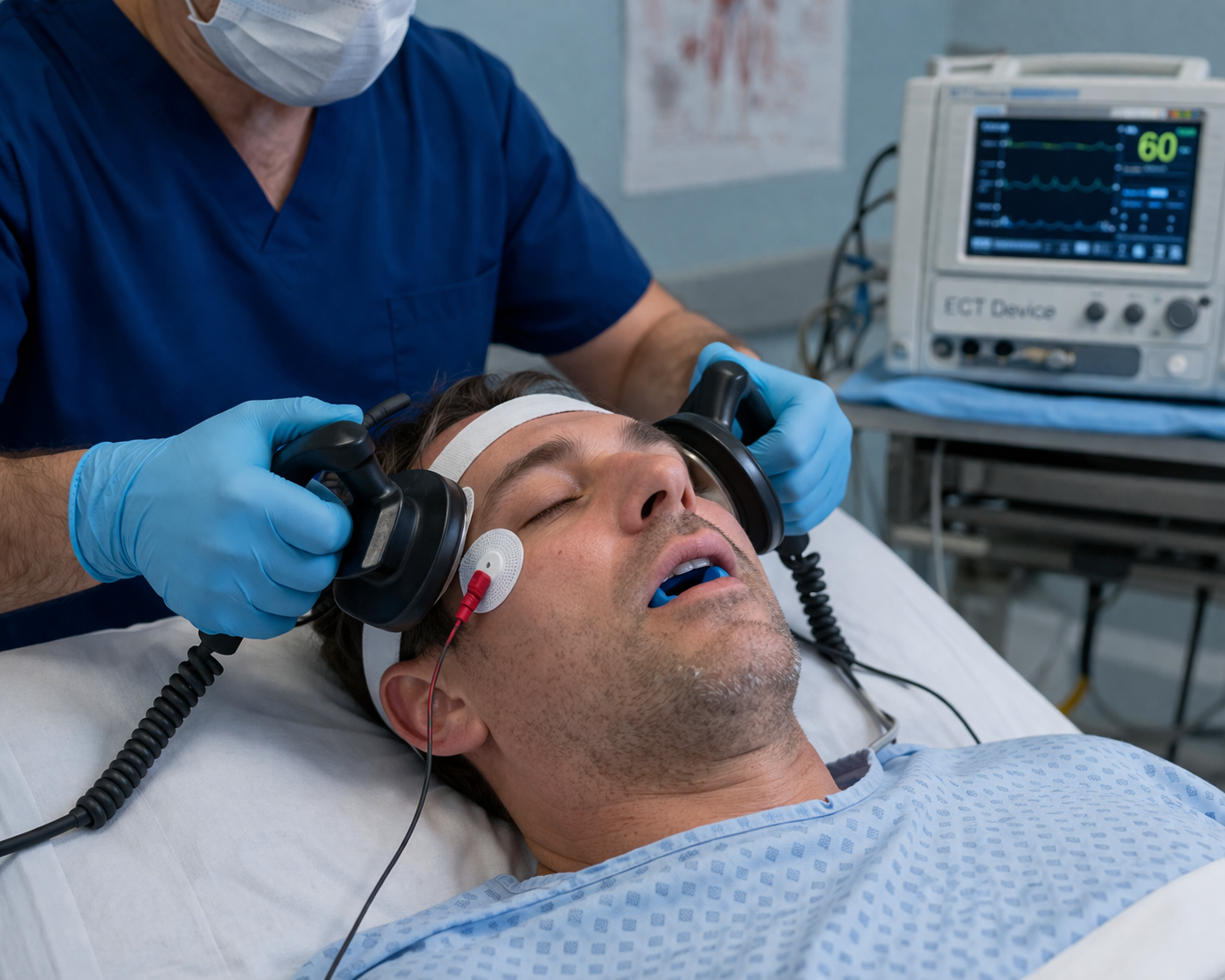
Then a controlled seizure is induced. A grand mal seizure. All the neurons in your brain firing at once, with the idea that it might reset something.
I had six to eight treatments over a short period.
For a lot of people, they don’t remember the treatments. They don’t remember the hospital.
For me, it was the opposite.
I remember being wheeled in. The nurses. The routine. Waking up.
But outside of that, things started slipping.
I couldn’t remember what movies I had seen.
Who some of my friends were.
How to read music.
That part was scary.
Some of it came back slowly. Some of it didn’t. And it still affects me a little even now.
And in the end… it didn’t help.
So it was back to medications. Adjustments. Waiting.
Until the next hope.
That next hope was VNS. The vagus nerve stimulator.
This was different.
This was surgery.
A device, about the size of a pacemaker, was implanted under my skin below my collarbone. A lead wire was tunneled up through my neck and attached to my left vagus nerve.
The vagus nerve is basically a communication highway between your body and your brain. A huge percentage of its signals travel upward into areas of the brain that regulate mood and emotion.
That’s why they targeted it.
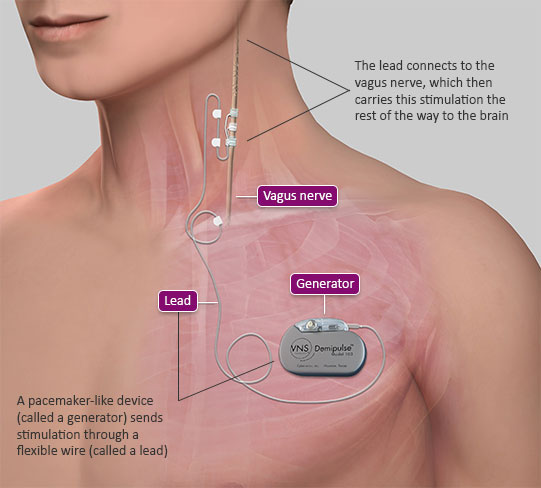
The idea was simple. If you could stimulate that pathway consistently, maybe you could influence those emotional centers in a way medications hadn’t been able to.
Every five minutes, for about thirty seconds, the device would send a small electrical pulse through that nerve.
I was part of the Phase 3 clinical trials in Minneapolis.
For two years, they adjusted the settings. The strength. The frequency. Trying to find the right combination that might shift something.
Physically, I could feel it.
Not pain. More like a tickle in my throat.
But the vagus nerve runs close to your vocal cords, so every time it activated, my voice would change.
If I tried to talk during those thirty seconds, I sounded like I was talking into a fan. Like a robot.
So I carried a strong magnet with me.
If I needed to speak, I could hold it over my chest and temporarily shut the device off.
That was just part of life.
And like everything else… I waited.
Week after week. Adjustment after adjustment.
Looking for something.
Anything.
A shift. A lift. A sign that this was finally doing what it was supposed to do.
But after two years, I had it removed.
It didn’t help.
And once again, I was back in that same place.
So when Spravato came along, it felt like the next holy grail.
Spravato - brand name for esketamine nasal spray - is basically a form of Ketamine.
Ketamine has been around for a long time as an anesthetic. Esketamine is like a refined version of it, one part of the original drug that’s been isolated and used specifically for depression.
And unlike most antidepressants, it doesn’t feel subtle.
You know something is happening.
You go into a clinic. They monitor you. And for a couple of hours, you sit there while it takes effect.
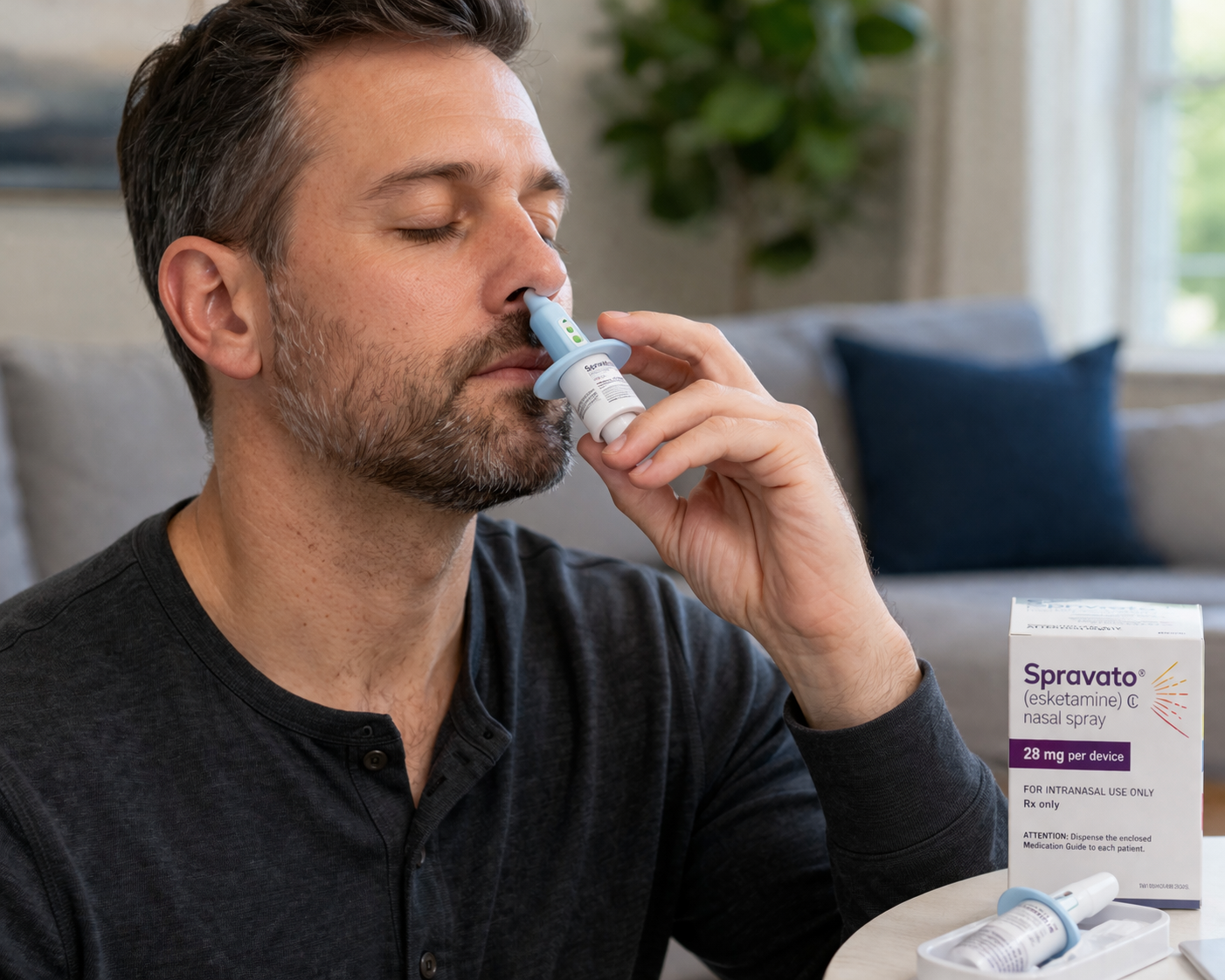
The room shifts a little. Your body feels different. Your thoughts move differently.
And for a moment, it feels like maybe something is happening.
Maybe this is it.
But like everything else, the question isn’t what it feels like in the moment.
It’s what happens after.
Does anything actually change?
Does it last?
I did Spravato treatments for over two years.
And honestly… I don’t know.
I don’t know if it was working behind the scenes or not.
There were moments where I thought maybe it was helping. Maybe something was shifting just enough to keep me afloat.
But there was never that clear moment. Never that feeling of this is it.
And once again, I found myself asking the same question.
What’s left?
Resistance is supposed to be futile.
But what if not giving up still counts, even when nothing is working?

Member discussion: