

The new age of neurodivergence is here and I honestly do not know where I fit inside it.
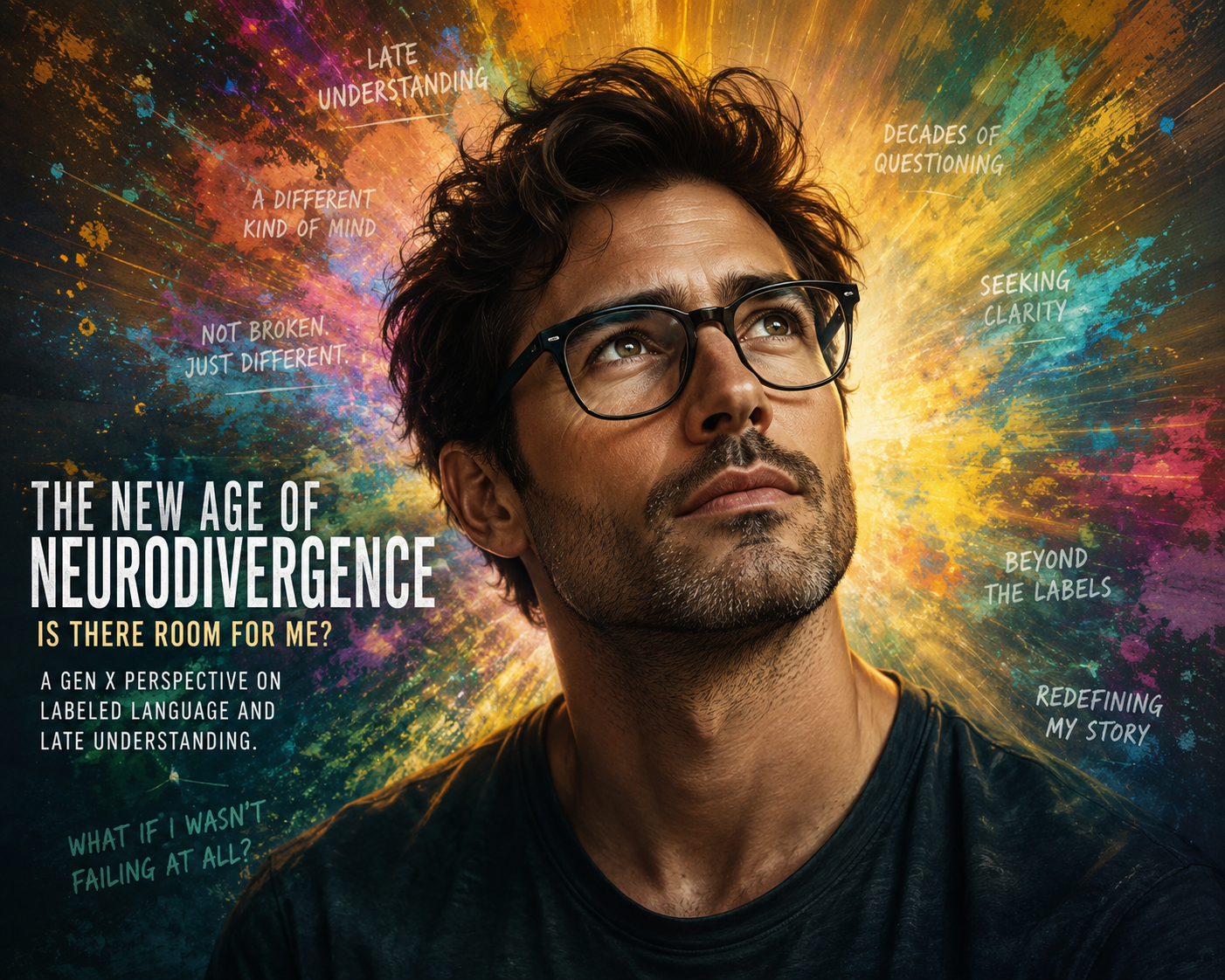
I am Gen X. We were not raised inside this language. We were raised in a narrower landscape where struggles were more often interpreted as personality flaws, lack of discipline, emotional weakness, or something you quietly pushed through.
We grew up interpreting struggles as character flaws before we had language to describe them any other way.
So now I find myself looking backward through an entirely different lens.
The terror I had making phone calls as a kid. The way small tasks could feel impossibly large in my head. The rehearsed conversations. The exhaustion after social interaction that other people seemed to recover from effortlessly. The feeling that ordinary life sometimes hit me with an intensity I could not explain.
I am trying to understand myself through language that did not exist when I needed it most.
I am wary of turning every personality trait, coping mechanism, fear, sensitivity, or emotional wound into pathology.
But then again, maybe that hesitation already makes me outdated. Because increasingly, this is the landscape now. People are revisiting old diagnoses, old struggles, old memories, and finding explanations where they once found shame.
So I look backward too.
Am I on the spectrum? Do I have some form of autism or ADHD? I honestly do not know. And I am cautious about overdiagnosing myself simply because I recognize parts of myself in the modern neurodivergent conversation.
Still, I cannot deny how familiar some of it feels.
And I am not even fully sure what neurodivergence means anymore. Is it a collection of diagnoses? Autism, ADHD, sensory processing disorders, learning disabilities? Or has it become something broader? A framework for understanding people whose minds seem to move through the world differently, regardless of whether those differences fit neatly inside clinical boundaries?
I genuinely do not know where the edges are now.
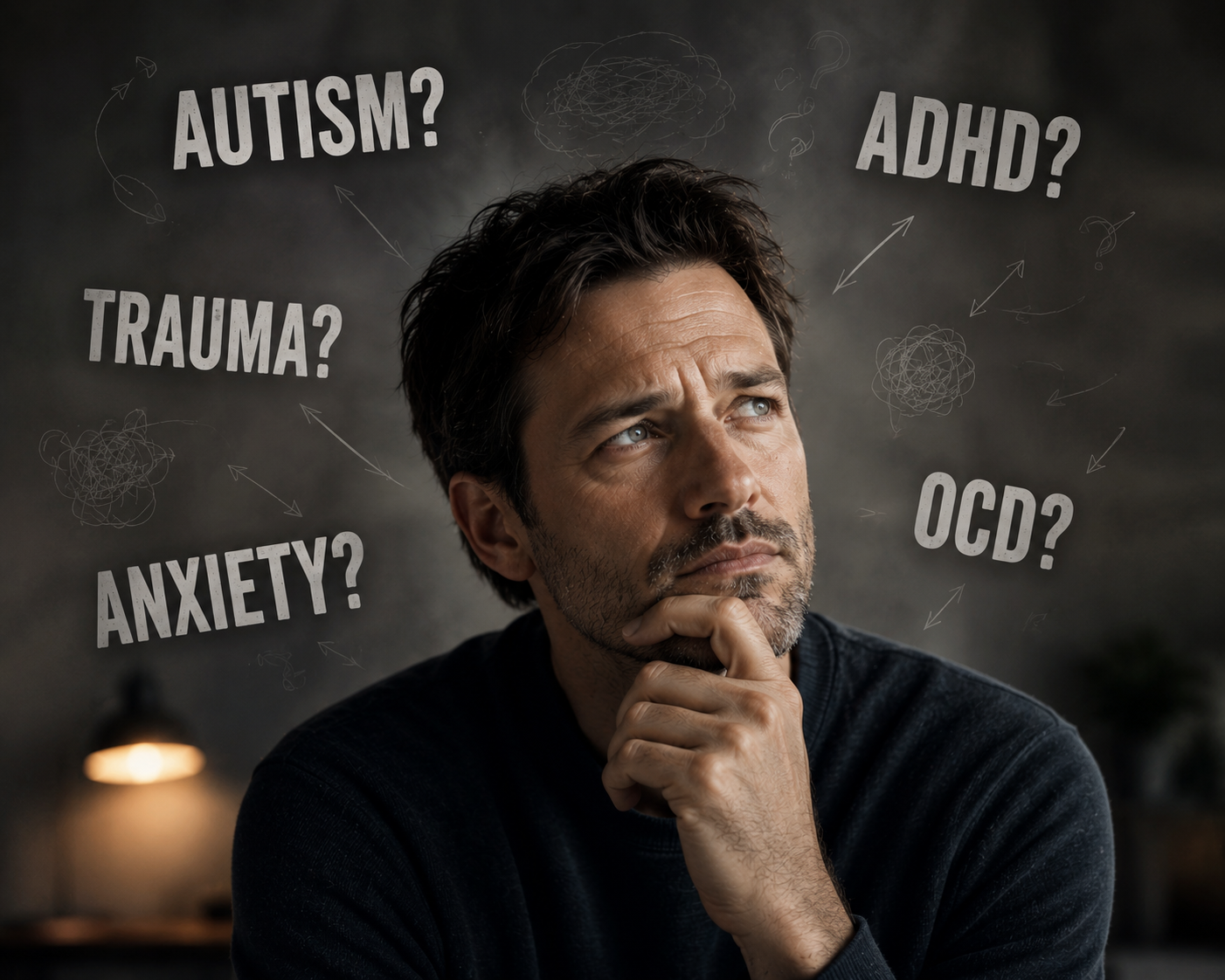
And maybe part of my uncertainty is generational. Sometimes I wonder whether there is even room inside this newer neurodivergent landscape for people like me. People who grew up before this language existed publicly. People who spent decades building identities around coping, masking, enduring, adapting, and self-judging long before social media began reorganizing human behavior into newer categories and frameworks.
Part of me wonders whether newer language offers understanding. Another part wonders whether it simply gives us more sophisticated ways to narrate the same pain.
Because if I spent decades judging myself before having language for these experiences, what exactly changes now that language exists? Does reinterpretation heal anything? Or does it simply place modern labels onto old suffering?
I do not know.
What I do know is that many of us grew up believing our struggles were moral failures. Lazy. Difficult. Dramatic. Too sensitive. Antisocial. Weak. We internalized those descriptions because no alternative framework existed around us.
And maybe there is value in finally questioning those conclusions, even if the answers remain unclear.
I still do not know exactly where I fit.
But for the first time in a long time, I am questioning whether I was ever as broken as I believed.

Member discussion: