

There was a point when I couldn’t listen to cello music at all.
Not casually. Not in passing. Not even for a few seconds without feeling something in me tighten and shut down.
That wasn’t always true.
As far back as I can remember, bedtime had a soundtrack. Literally. In my family, my siblings and I used music to coax ourselves to sleep.
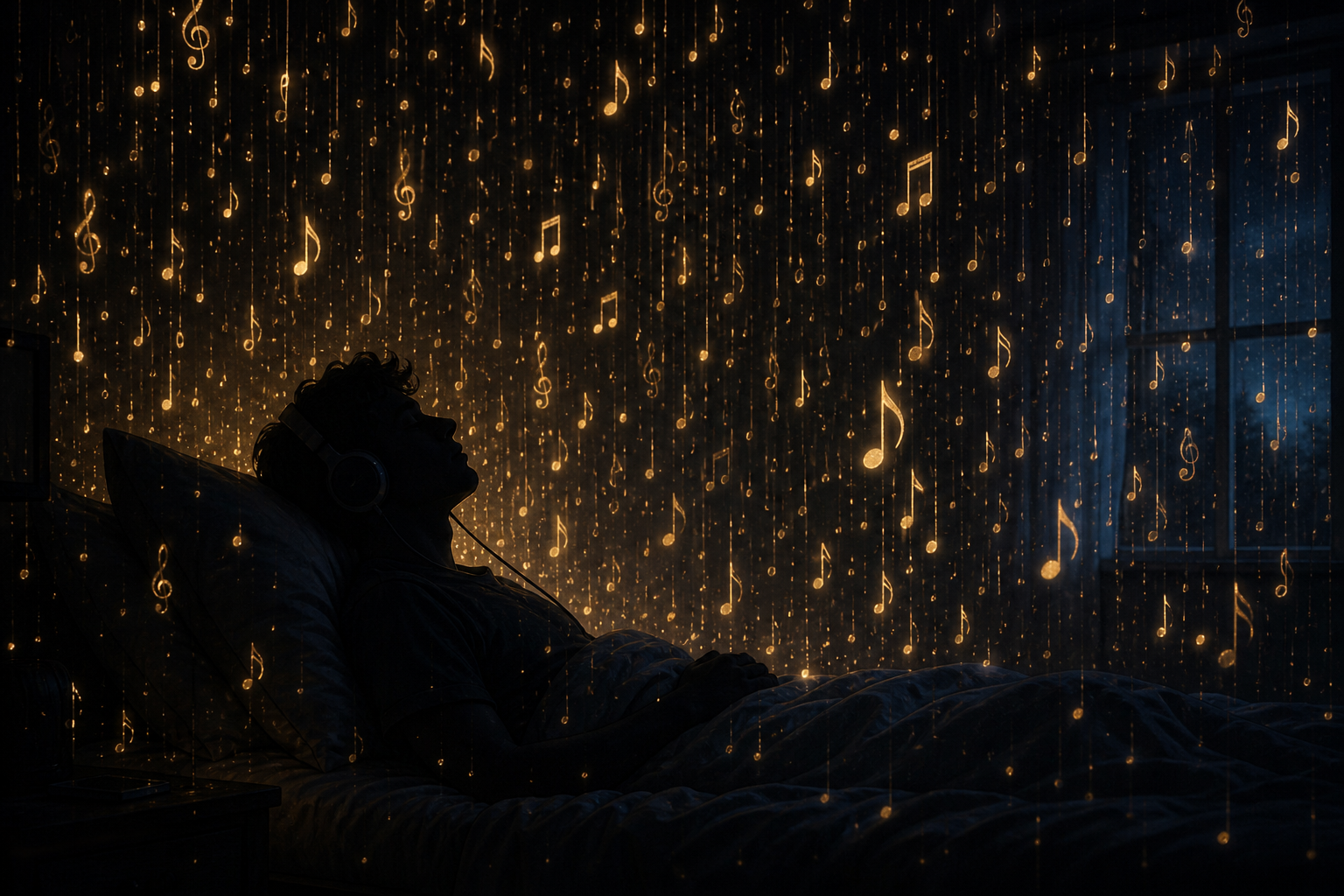
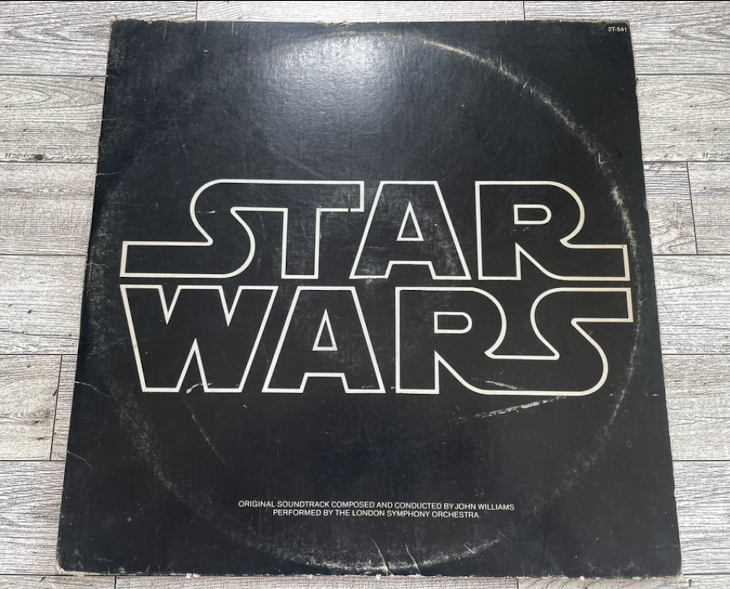
I remember lying in bed in 1977, listening to the original Star Wars and Grease soundtracks on vinyl. That nightly ritual stuck with me for decades, and it got pretty poignant during my teen years as I started emerging as a cellist. I’d lie there in the dark and let the masters take over: Dvořák, Elgar, Bach, and Bruch. I’d study the phrasing of Yo-Yo Ma and Lynn Harrell, and the fierce, heartbreaking passion of Jacqueline du Pré. To me, their recordings were like a conversation—they were whispering instructions for my future.
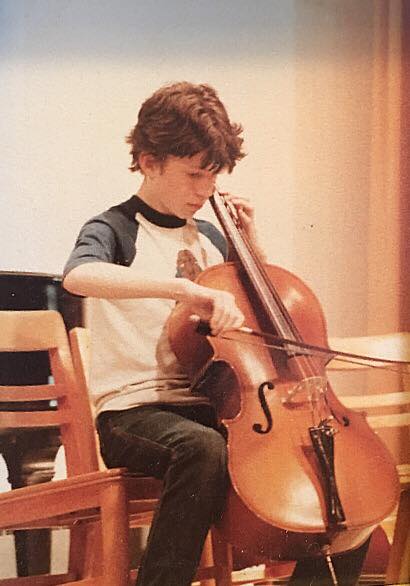
I’d listen in this hazy, daydreamy way, fully convinced that these masterpieces were within my grasp. And for a while, they were. It was surreal when I could finally play things like Eine kleine Nachtmusik or technical showpieces like Czardas and Flight of the Bumblebee. I was finally performing the music I’d grown up worshipping, even playing in the pit orchestras for musicals—one of my favorite crossovers.
The Silence of the Closed Door
The shift happened in 1995. I graduated with a music performance degree for cello, standing on the threshold of the life I’d spent decades scoring in my head. But the doors I’d fantasized about stayed shut—or at least, they felt completely out of reach.
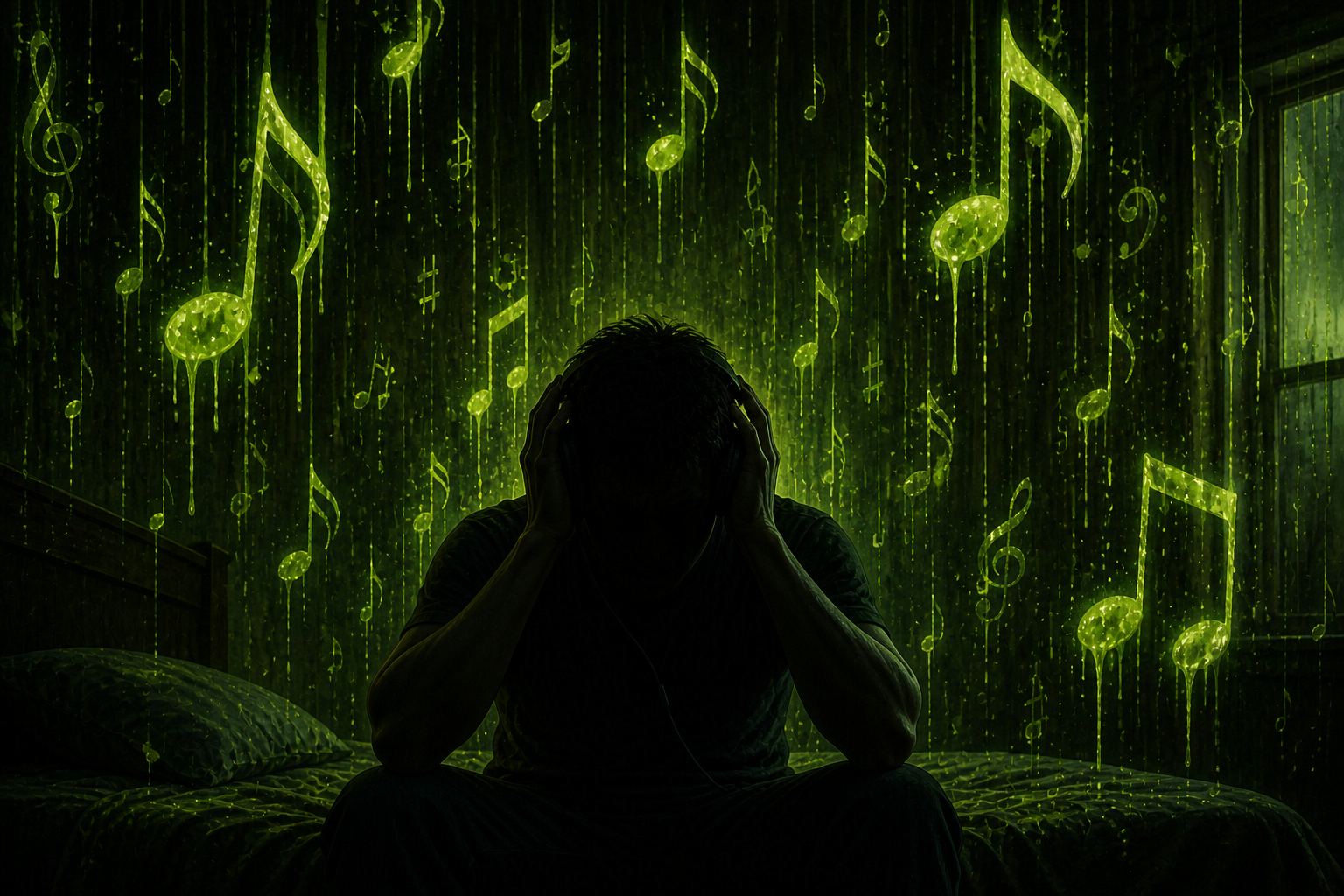
Suddenly, the music turned sour.
When I lay in bed at night, those recordings became my interrogators. They didn’t tell me what I could do anymore; they just reminded me of what I was able to do in the past. I had to “divorce” my instrument’s voice. I stopped listening to classical music and cello pieces entirely. The sound was just too sharp. Hearing du Pré’s Elgar wasn’t inspiring; it felt like a post-mortem of a failure.
The New Frequency
I didn’t stop listening to all music—just the stuff I’d been trained to play. I couldn’t handle the “perfection” of the cello, so I looked for voices with some grit. I made playlists of artists like Pink and Alanis Morissette. John Williams’ theatrical scores stayed in the mix, too, but I used them differently—blasting them loud like the rumble of a ship going into hyperspace just to get through the day.
Later, Dear Evan Hansen became a total lifeline. It gave my goalless life actual words and themes. Specifically, “You Will Be Found” was the hopeful song I chose to cling to. It was the reminder I needed when I felt invisible—a promise that the darkness wouldn’t be the final word.
The Permanent Passenger
For two years after graduation, I lived in a vast pit of darkness. It wasn’t just a temporary dip; 1995 was the start of a battle with depression that would last the rest of my life.
I retreated into the cerebral worlds of Stephen Sondheim, clinging to Into the Woods and Sunday in the Park with George. Sondheim got it—he knew that “finishing the hat” is an obsessive, often lonely act. But the song I held closest was “Move On.” It became this sad but hopeful link to a future of possibilities I couldn’t yet see. It gave me permission to stop looking back at the “perfect” path I thought I missed and just keep moving, even if I was moving into the dark.
Redefining the Score
I’ve felt more stable this past year—handling life in a way that felt impossible for decades. But I’m still cautious. When I put on a recording of Lynn Harrell or Jacqueline du Pré now, I do it slowly. I’m still listening for the ghosts, still checking to see if the "sourness" is going to creep back in. I’m redefining my destiny one "small move" at a time, and I’ve realized that destiny isn't a destination—it’s just the courage to stay in the room with the music.
I think it’s because I’ve finally found an outlet in this blog. Writing these posts is giving me the grace to redefine myself at 54. I still need the "banging tunes" of Pink, the raw emotion of Calum Scott, and the soaring scores of Alan Silvestri.
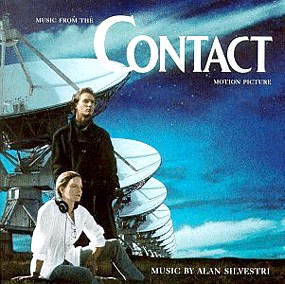
Specifically, I keep coming back to Silvestri’s score for Contact. There’s a line in that movie, reflected in the track "Awful Waste of Space," that has become a bit of a mantra for me. It’s the realization that everything I’ve learned over the last thirty years—the discipline of the cello, the grit it took to survive the depression, the creative pivots—has to be worth something. If I don’t find a way to use that history and weave it into what I’m doing now, then all that time and all that depth really would be an "awful waste of space."
I’m finally at a place where the music is back on, but the volume is manageable. I’m not mourning the soloist I didn’t become; I’m just trying to be the artist I am today. I’m learning to trust the advice Dot gives George in Sunday in the Park with George when the past feels too heavy. She tells him to stop looking back at what "should" have been and just create:
“Anything you do, let it come from you. Then it will be new. Give us more to see.”

Member discussion: