

A friend recently asked what I was doing with my life these days. I gave her a loose timeline of the last few years and ended with, “Now I’m just sitting here in my hometown… rotting.”
She was quick to push back. “I am sure you know the power of negative thoughts,” she said. “Ain’t nobody got time for that! Try—just try—to be as kind to yourself as you would be to an old friend.”
The darkness of depression can suck the joie de vivre out of anything, much like the Dementors in Harry Potter. It feels like it even drained the life out of music for a while. And it struck me that so many things my inner voice tells me—about my life, my grief, my relationships, and my cello playing—are things I would never dream of saying to a friend.
If I wouldn’t say it to them, why is it so easy to say it to myself?

The Comparison Trap
I’ve touched on this before in my post The Comparison Trap (https://fessupblog.substack.com/p/the-comparison-trap), but looking back, I realize how deep those roots actually go.
When you’re pursuing a performance degree, “perfection” isn’t written in the syllabus, but it’s everywhere. It’s in the room. In the expectations. In the silence after you play. It wasn’t just about the music, either; it bled into my physical aesthetic. There was this unspoken rule that everything had to be “tight”—the technique, the performance, and the body.
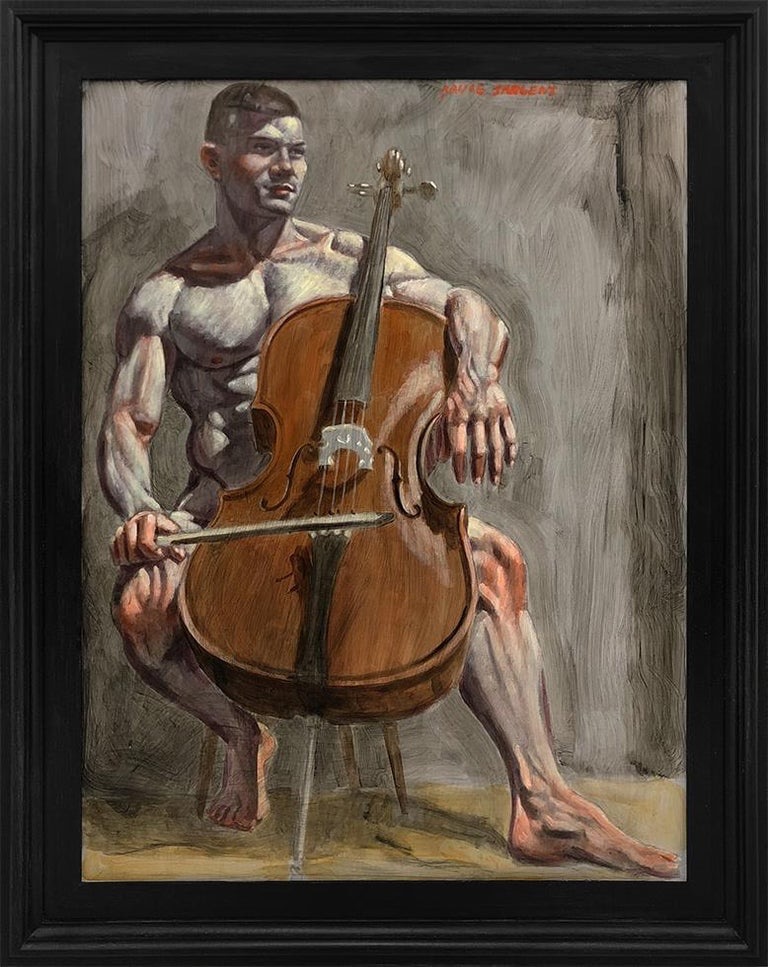
In the gay community, that pressure can get turned up to a deafening volume. I felt like if I didn’t fit that narrow, lean ideal, I’d be rendered invisible. I was measuring my soul against Yo-Yo Ma and my body against an impossible standard. And somewhere along the way, I stopped hearing the music I was actually making and stopped seeing the person I actually was.
The Liberation of Distance
What’s strange is, I’ve already lived an alternative.
For a while, I was in an eclectic band called “Go Ask Brian.” We played original folk-rock that was just… fun. I played electric cello, and something about it felt like a shield. I wasn’t just a body on a stage being evaluated for “tightness.” I was part of a sound.
The electric cello let me be loud, a little gritty, a little imperfect. It was the first time I understood that “unpolished” could be a vibe instead of a failure.
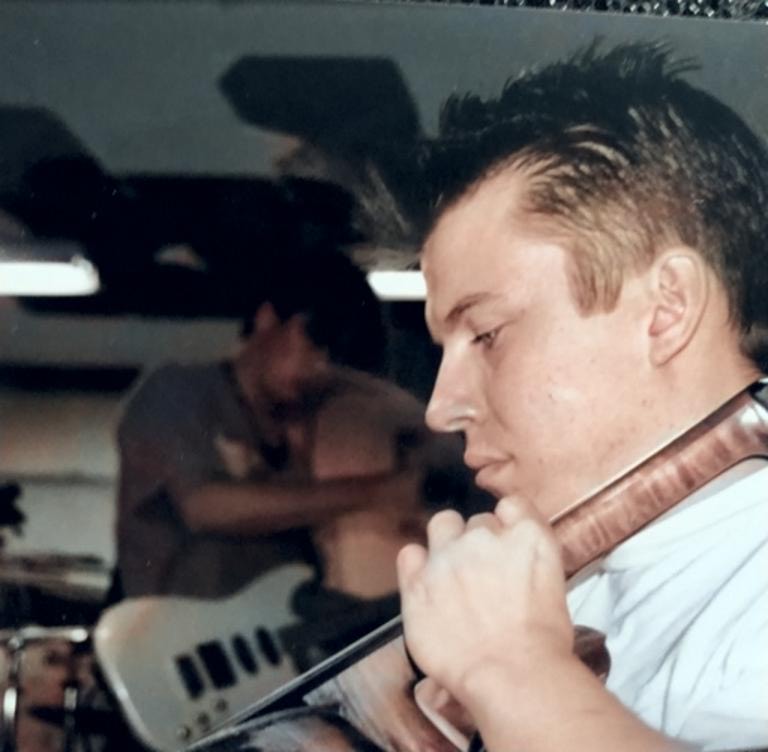
I felt something similar when I moved to Minneapolis and started playing open mics with coworkers. I was far away from the expectations I had internalized. And because I was usually the only cellist in the room, I gave myself room to be messy.
Not because I suddenly became more skilled—but because I became less cruel.
And that’s the part that’s hard to ignore.
If I walked into a coffee shop and saw another cellist playing, I wouldn’t judge them. I’d listen. I’d be curious. I might even ask to jam. But for years, I’ve met my own playing with a magnifying glass and a red pen.
The Morning Pass
The strange thing is, I already know what the antidote feels like.
Even this morning, sitting down to write, I felt scattered. I couldn’t focus. I didn’t know where this was going. And instead of shutting down, I did something I almost never do in other parts of my life:
I gave myself a pass.
I let it be messy. I let it be incomplete. I let it be honest.

This blog exists as an unpolished, unapologetic look into the trenches of depression. I allow that here because the goal is truth, not prestige.
But somewhere along the way, I decided that grace only applies to the writer.
Not the musician.
Not my body.
Not the person in the mirror.
I gave the writer a pass.
I withheld it everywhere else.
Landing with Conviction
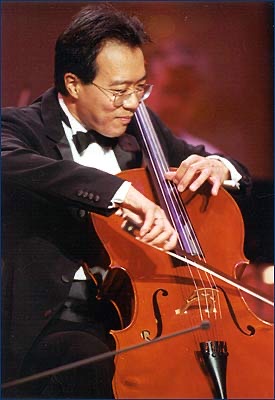
I keep thinking about a masterclass I saw Yo-Yo Ma give. He said something that should have changed everything for me:
“If you’re going to make a mistake, make it the biggest, grandest mistake you can make. Land on the wrong note with the same conviction as all the other ‘good’ notes you’ve landed on.”
He was giving permission to fail with style. To be bold instead of perfect.
But at the time, I was too busy sharpening the knives of perfectionism. Every mistake—musical or otherwise—became evidence. Proof that I wasn’t enough. And I’d start the internal beat-down before the piece was even over.
Now I can see it more clearly.
If I can give the writer a pass for a scattered morning, maybe I can give the cellist a pass for a missed shift. Maybe I can give the man in the mirror a pass for just being human.
The grace I offer myself on the page doesn’t have to be a fluke.
It can be a practice.
And maybe that’s what this looks like, for now—learning how to land on my life with a little more conviction.
Wrong notes and all.

Member discussion: